Introduction
On August 7, 2025, OpenAI officially launched GPT-5, the successor to GPT-4o. Unlike previous upgrades, GPT-5 is described as a PhD-level intelligence system that can reason, code, and process multiple information formats. It is now the default model in ChatGPT, available to millions of users around the globe.
With its ability to handle huge contexts, integrate with popular apps, and route tasks smartly between models, GPT-5 is already sparking excitement and debate.
This article will break down GPT-5’s evolution, features, applications, limitations, industry response, and future outlook. The goal is to help you understand how this AI could affect education, business, software development, and everyday life.
Evolution from GPT-4 to GPT-5
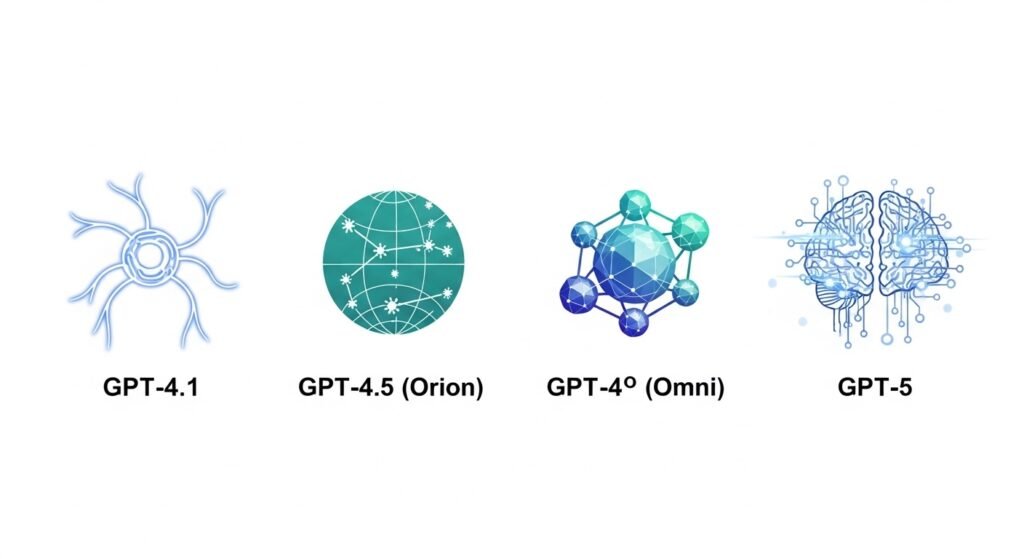
The story of GPT-5 can’t be told without its predecessors:
- GPT-4o (Omni): Introduced real-time multimodal features, text, vision, and audio.
- GPT-4.5 (Orion): Smarter reasoning but limited scale.
- GPT-4.1: Tuned for accuracy and better balance.
- GPT-5: A bold step with dynamic model routing, larger context windows, and enterprise-ready connectors.
GPT-5 is not just another model; it’s a system designed to be flexible, scalable, and more practical for everyday and enterprise use.
Key Features of GPT-5
1. Dynamic Model Routing
GPT-5 includes a switcher system: simple prompts are handled by a fast, lightweight model, while complex reasoning is routed to a deeper model. This makes responses both efficient and powerful.
2. Variants & Pricing
OpenAI released multiple GPT-5 versions:
- GPT-5 Mini – Fast and lightweight.
- GPT-5 Nano – Designed for edge devices.
- GPT-5 Thinking Mode – Slow but very detailed reasoning.
- GPT-5 Pro – Enterprise-grade with extended API powers.
Pricing ranges from free (with usage limits) for ChatGPT users to premium tiers for developers and businesses.
3. Massive Context Window
GPT-5 supports 256K tokens in ChatGPT and up to 400K tokens via API. That means it can analyze long books, coding repositories, or huge research papers without losing track.
4. Multimodal Strength
GPT-5 handles text, images, audio, and code. It’s powerful in coding and healthcare-related tasks and capable of real-time transcription and analysis.
5. App Integrations
With connectors for Gmail, Google Calendar, Teams, and GitHub, GPT-5 is more like a faithful AI assistant that blends into daily work.
Real-World Applications
Coding & Development
Developers praise GPT-5 as a co-pilot for coding, generating, and reviewing software more efficiently.
Education
Teachers can use GPT-5 to create lesson plans, assist with grading, and support personalized learning. Students benefit from more precise explanations and note-taking.
Healthcare
While still requiring oversight, GPT-5 is improving diagnostic reasoning and health research.
Business Productivity
By connecting to calendars, emails, and collaboration tools, GPT-5 boosts productivity for professionals and teams.
Limitations & Criticisms
Despite progress, GPT-5 has drawn mixed reactions:
- Not a giant leap: Some feel it’s an upgrade, not a revolution.
- Launch glitches: Early users reported routing errors and task failures.
- Bias and safety issues: GPT-5 still hallucinates and carries risks.
- Costs for depth: Pro-level reasoning can be expensive for developers.
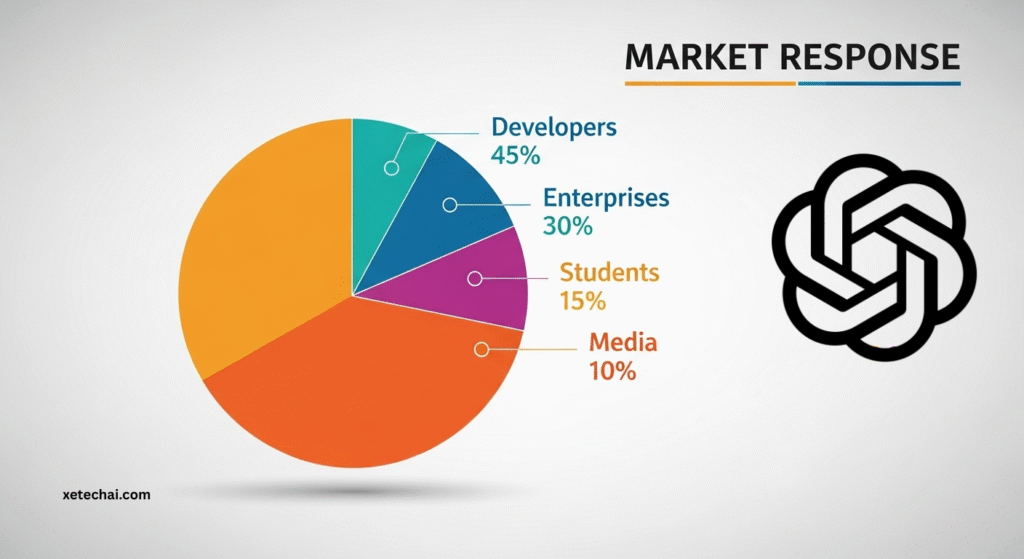
Industry Reactions
- Developers: Excited about coding but critical of reasoning.
- Enterprises: See GPT-5 as a tool to maximize ROI.
- Students & Educators: Encouraged to learn AI literacy with GPT-5.
- Media: Some praised its coding power; others called it underwhelming.
Future Outlook
GPT-5 raises key debates:
- Are we hitting an AI plateau, or is this a stepping stone toward AGI?
- Will GPT-5’s connectors and variants transform enterprise workflows?
- Can students worldwide now access high-level intelligence tools for free?
Whatever the answer, GPT-5 shows that AI is moving closer to becoming a partner in daily work and learning.
Conclusion
GPT-5 may not be the AGI breakthrough, but it is a powerful and practical AI ecosystem. With flexible variants, huge context handling, multimodal reasoning, and workplace integrations, it sets a strong foundation for the next wave of AI innovation. The real challenge will be to ensure safety, fairness, and accessibility as adoption spreads.
Frequently Asked Questions
1. What is GPT-5 and when was it released?
Answer: GPT-5 is OpenAI’s latest AI model, launched on August 7, 2025.
2. How is GPT-5 different from GPT-4?
Answer: It offers dynamic routing, a much larger context window, better reasoning, and more app integrations.
3. Is GPT-5 free to use?
Answer: Yes, but with limits. The free ChatGPT plan includes GPT-5 access, while pro and enterprise plans offer more usage and advanced features.
4. What are GPT-5’s strongest skills?
Answer: Coding, multimodal reasoning, extended context analysis, and productivity integrations.
5. What are GPT-5’s weaknesses?
Answer: Occasional hallucinations, bias, costly reasoning in Pro mode, and mixed feedback on personality.
6. Can GPT-5 be trusted in healthcare?
Answer: It shows strong potential, but it still requires expert oversight before use in critical health decisions.
7. Who benefits most from GPT-5?
Answer: Students, educators, developers, and businesses can leverage GPT-5 for productivity and learning.
8. Is GPT-5 the path to AGI?
Answer: Experts disagree; some see it as a plateau, while others view it as a step closer to AGI.