
Summary:
AI Automation in 2025 is no longer just a trend; it’s a career revolution. This complete guide takes you step-by-step from beginner to expert, covering Python, machine learning, NLP, computer vision, robotics, and generative AI. Learn practical skills, build real-world projects, explore top AI tools, and discover high-paying career paths in the AI-driven future.
Introduction: Why AI Automation Learning is No Longer Optional in 2025?
AI Automation in 2025 is not just a trend; it’s a career revolution. In 2025, Artificial Intelligence (AI) is no longer a futuristic buzzword; it’s the backbone of industries, economies, and productivity. From AI-powered medical diagnostics to self-driving delivery robots, AI has shifted from a niche tech to a global necessity.
Stat to Note: According to the World Economic Forum, AI will create 97 million new jobs by 2030, and over 77% of companies already use AI Automation in some form.
The question is no longer “Should I learn AI Automation?”, it’s “How quickly can I start?”
In this guide, we’ll explore why learning AI Automation in 2025 is crucial, share real-world examples, and provide a complete learning roadmap to start your AI Automation journey with clarity and confidence.
Why Learning AI Automation in 2025 is a Game-Changer?
1. AI Automation is Eating the Job Market (In a Good Way)
While some fear AI Automation replacing jobs, the reality is that it’s creating new, high-paying career paths that didn’t exist before.
| Career Role | Avg. Salary (USD) | Key Skills |
|---|---|---|
| AI Engineer | $120K–$250K | Python, TensorFlow, PyTorch |
| AI Product Manager | $110K–$200K | AI Strategy, Business Knowledge |
| Prompt Engineer | $90K–$160K | NLP, Prompt Design |
| Machine Learning Engineer | $150K | ML Models, Deep Learning |
| Robotics Engineer | $125K | ROS, AI Vision, C++ |
2. AI Automations are Already Everywhere
From your phone’s predictive keyboard to Netflix’s recommendation engine, AI is already shaping daily life. Learning AI Automation now means understanding, creating, and monetizing these systems.
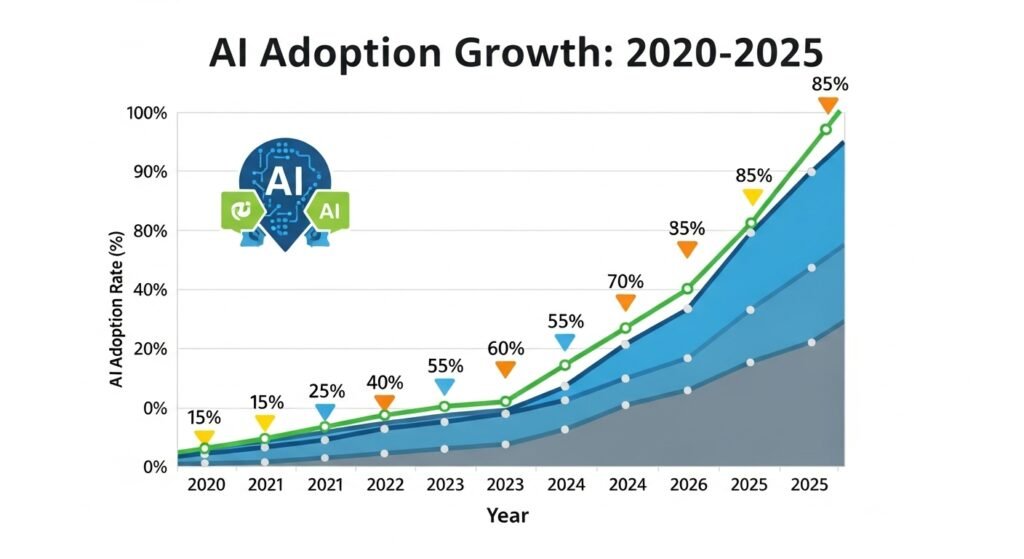
3. AI Automation is Exploding Global Adoption
Gartner predicts that by the end of 2025, 60% of organizations will operate AI Automation across multiple business units. Companies are no longer experimenting; AI is now a core operational strategy.
Real-World Examples of AI Automations in Action (2025)
- Healthcare: Google’s Med-PaLM 2 AI diagnoses rare diseases more accurately than human doctors, helping clinicians make faster, data-backed decisions.
- Finance: JPMorgan uses AI to predict market trends with 85% accuracy, optimizing trading and reducing risks.
- Education: Khan Academy’s AI tutors provide personalized learning paths, helping millions of students improve outcomes efficiently.
- Content Creation: Tools like ChatGPT-5 and Midjourney v6 generate professional-grade articles, images, and videos within seconds, democratizing content creation for individuals and businesses.
- Robotics: Boston Dynamics’ AI-powered robots assist in warehouses, logistics, and manufacturing automation, improving efficiency while reducing human error.
Complete AI Automation Learning Roadmap
Before building complex systems, you need a strong foundation:
Step 1: Understand the Basics (Beginner)
- Programming: Python is essential. Start with basics like variables, loops, and functions.
- AI vs ML vs DL: Understand the difference between Artificial Intelligence, Machine Learning, and Deep Learning.
- Data Basics: Learn CSV, JSON, SQL, and data cleaning techniques.
Recommended Resources:
- Coursera – AI for Everyone (Free)
- Udemy – Deep Learning A-Z: AI Python Course
- MIT OpenCourseWare – Introduction to Computer Science and Programming
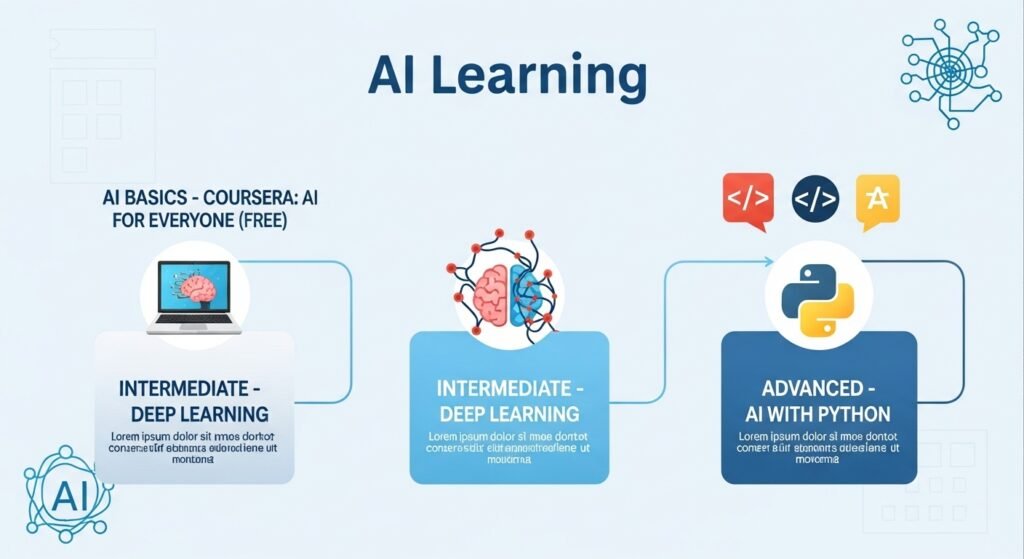
Step 2: Build Your First AI Models (Intermediate)
Once the basics are straightforward, start building models:
- Supervised and Unsupervised Learning: Learn regression, classification, and clustering.
- Libraries: TensorFlow, PyTorch, scikit-learn.
- Datasets: Kaggle competitions, UCI Machine Learning Repository, Google Dataset Search.
Hands-On Projects:
- Predicting housing prices using linear regression.
- Sentiment analysis on social media posts.
- Customer segmentation using clustering.
Step 3: Specialize (Advanced)
After building models, choose a career track:
- Computer Vision (CV): AI for image and video recognition, autonomous vehicles, surveillance systems.
- Natural Language Processing (NLP): Chatbots, translation services, sentiment analysis, and AI writing assistants.
- Generative AI: Image, video, and music generation with tools like Midjourney, Runway, and Stable Diffusion.
- AI in Robotics: Autonomous robotics, industrial automation, AI for drones.
Advanced Resources:
- Stanford University – CS231n: Convolutional Neural Networks for Visual Recognition
- DeepLearning.ai – Natural Language Processing Specialization
- Fast.ai – Practical Deep Learning for Coders
Step 4: Create and Deploy AI Projects
Now you’re ready to apply knowledge in real-world systems:
- AI Applications: Build AI apps using LangChain, HuggingFace, or OpenAI APIs.
- Deployment: Use Streamlit or Flask to deploy models for web applications.
- Automation Pipelines: Integrate AI models with workflow automation tools like Zapier, n8n, or Make.
Portfolio Ideas:
- AI-powered chatbot for e-commerce customer support.
- Image recognition system for retail or healthcare.
- A multi-agent AI system that automates social media content posting.
Top AI Career Paths in 2025
| Career Path | Avg. Salary (USD) | Key Skills |
| Machine Learning Engineer | $150,000 | Python, ML, TensorFlow |
| AI Product Manager | $135,000 | AI strategy, communication |
| NLP Engineer | $140,000 | Transformers, NLP libs |
| Robotics Engineer | $125,000 | ROS, C++, AI vision |
Top AI Tools to Learn in 2025
| Tool | Use Case |
|---|---|
| OpenAI GPT-5 | Advanced NLP & text generation |
| LangGraph | Multi-agent orchestration & workflow automation |
| Midjourney v6 | AI-powered image & art generation |
| Pinecone | Vector databases for AI-powered search |
| Runway Gen-3 | AI video creation |
| Perplexity AI | AI-powered search & research |
| HuggingFace | NLP models & AI deployment |
Future Predictions for AI Automation (2025–2030)
- AI Agents Will Replace Many Apps: Multi-agent systems will handle tasks from end to end, reducing reliance on multiple individual apps.
- Personal AI Assistants: Every professional could have AI “employees” to automate routine work.
- AI + Robotics Merge: Autonomous service robots will become common in homes, offices, and warehouses.
- Generative AI in Content & Design: Almost every industry will use AI for content, design, and idea generation.
FAQs for Learning AI Automation in 2025
1. Is AI Automation worth learning in 2025?
Absolutely. AI Automation is no longer a niche skill; it’s becoming the foundation of every primary industry, from healthcare to finance to robotics. Learning AI in 2025 is like learning the internet in 1999. Early adopters gain a huge career advantage, higher salaries, and global work opportunities.
2. Can I learn AI Automation without coding?
Yes. Platforms like Coursera’s AI for Everyone and Google AI tools allow you to understand AI concepts without writing a single line of code. However, coding (Python, JavaScript) will be essential if you aim for advanced roles like an AI Engineer.
3. What is the fastest way to learn AI Automation?
Follow a structured roadmap:
- Basics – AI concepts & terminologies
- Hands-on practice – Using no-code tools (ChatGPT, Runway, Pika)
- Intermediate – Python for AI, basic ML models
- Advanced – Deep learning, agentic AI, robotics
Dedicated daily learning for 3–6 months can make you job-ready.
4. Which AI career pays the most?
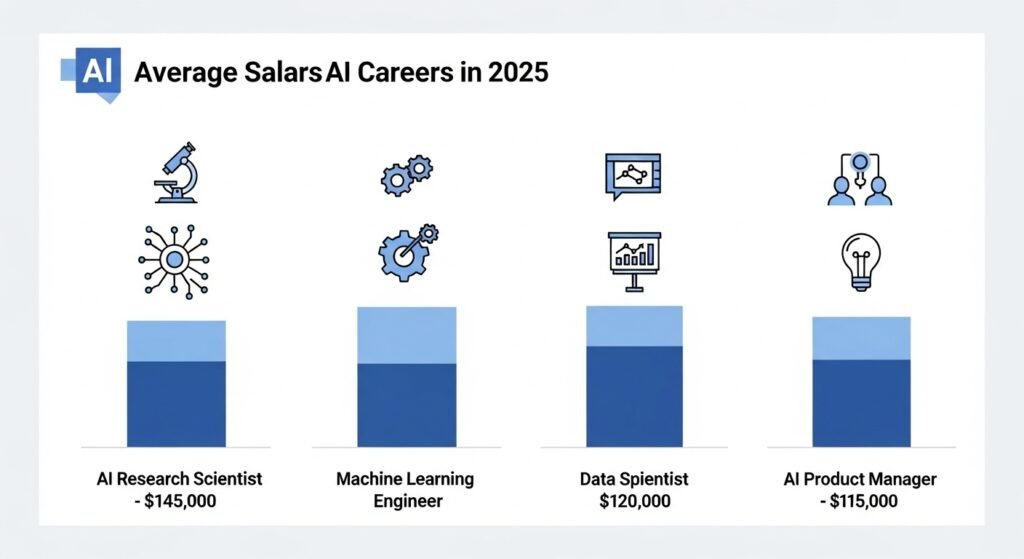
In 2025, the highest-paying AI careers are AI Research Scientist (average annual salary of $145,000) and Machine Learning Engineer, followed closely by AI Solutions Architect.
5. How long does it take to learn AI?
If you commit 1–2 hours daily, you can understand AI basics in 4–6 weeks and reach a job-ready level in 6–12 months. Mastery (research-level expertise) can take several years of continuous practice.
6. Is AI difficult to master?
It can be challenging at advanced levels, but modern AI learning resources, online courses, and interactive tools make it much easier than before. The key is consistent practice and working on real-world projects.
7. What are the top AI Automation tools in 2025?
- ChatGPT-5 – Conversational AI & automation
- Claude 3.7 – AI writing & reasoning
- Midjourney v6 – AI image generation
- LangGraph – Multi-agent AI workflows
- Runway Gen-3 – AI video creation
- Perplexity AI – AI-powered search & research
8. Will AI Automation Global Adoption take over human jobs completely?
No, AI will replace tasks, not entire professions. Many jobs will evolve rather than disappear. The best strategy is to learn AI skills and position yourself to work alongside AI systems, not against them.
Conclusion: The Future of AI Automation in 2025 and Beyond
AI Automation in 2025 is more than a skill; it’s a roadmap to innovation, high-paying opportunities, and global influence. By mastering Python, ML, NLP, robotics, and generative AI, you can secure a career at the forefront of the AI revolution.
Pro Tip: Start small, focus on projects, and gradually specialize. Combining practical experience with advanced AI tools positions you as a leader in this fast-growing field.
Resources to Get Started:
- Coursera – AI For Everyone
- DeepLearning.ai – Machine Learning Specialization
- HuggingFace – Transformers & NLP
- Kaggle – Datasets & Competitions
- MIT OpenCourseWare – Introduction to AI
- Fast.ai – Practical Deep Learning
AI automation helps small businesses save time, reduce costs, and scale more efficiently across their operations. Read Here:AI Automation for Small Businesses: A Complete 2025 Guide to Tools, Benefits and Real Examples